

Balford Henry, award-winning veteran journalist, dies at 74
Balford Henry died on Monday 14 September 2026, aged 74. He entered journalism in 1971 while in sixth form at Wolmer’s Boys’ School.
Jamaica Observer
Jamaica Observer
September 14, 2026
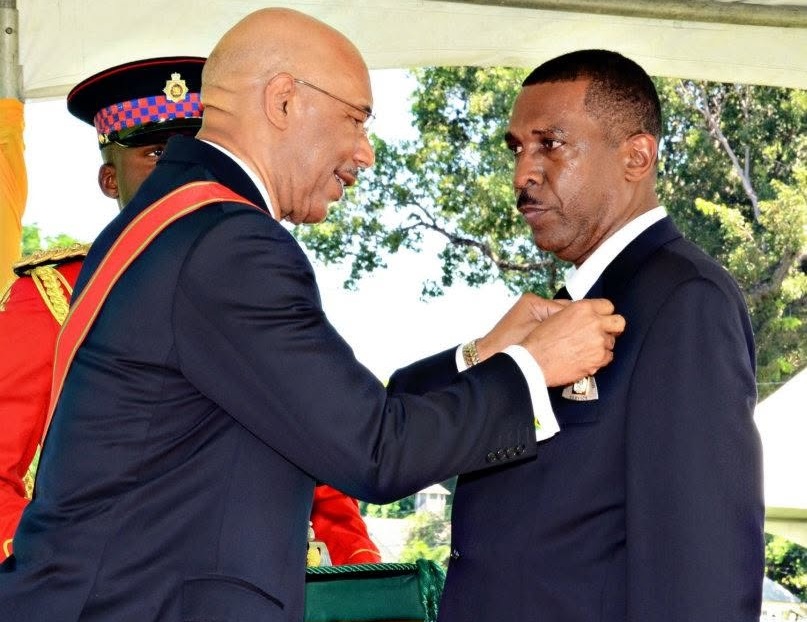
KINGSTON, Jamaica – Award-winning veteran journalist Balford Henry, whose career spanned more than five decades of reporting, has died at the age of 74.
He died on Monday after a short illness.
Henry entered journalism in 1971 as a trainee reporter with the Gleaner while in sixth form at Wolmer’s Boys’ School in Kingston.
Early in his career, he reported on sittings of the Kingston and St Andrew Corporation (KSAC) before making his name as a labour relations reporter and later a parliamentary journalist.
He also covered major social and cultural activities and historical events, including Bob Marley’s funeral in 1981.
Henry also served as a senior reporter with the Jamaica Observer and a consulting editor at the Jamaica Information Service (JIS).
A recipient of a number of professional awards, Henry was the winner of the Press Association of Jamaica (PAJ) Honorary Award for a series on the social and economic problems facing Jamaican youths in Britain’s inner cities, based on his own experience while living in the country in 1977, according to the JIS.
He also won the PAJ Best Story award for his coverage of Marley’s funeral as well as the PAJ’s first Cultural Story Award for the feature on reggae singer Junior Byles entitled, ‘Fall of a Superstar’.
In 2011, Henry was conferred with the Order of Distinction (Officer Class) for distinguished service to journalism.
He leaves behind two daughters.
Source: Jamaica Observer, 14 September 2026. Republished for the Wolmer’s Trust community with attribution.
Jamaica Gleaner
by Karen Madden
September 15, 2026
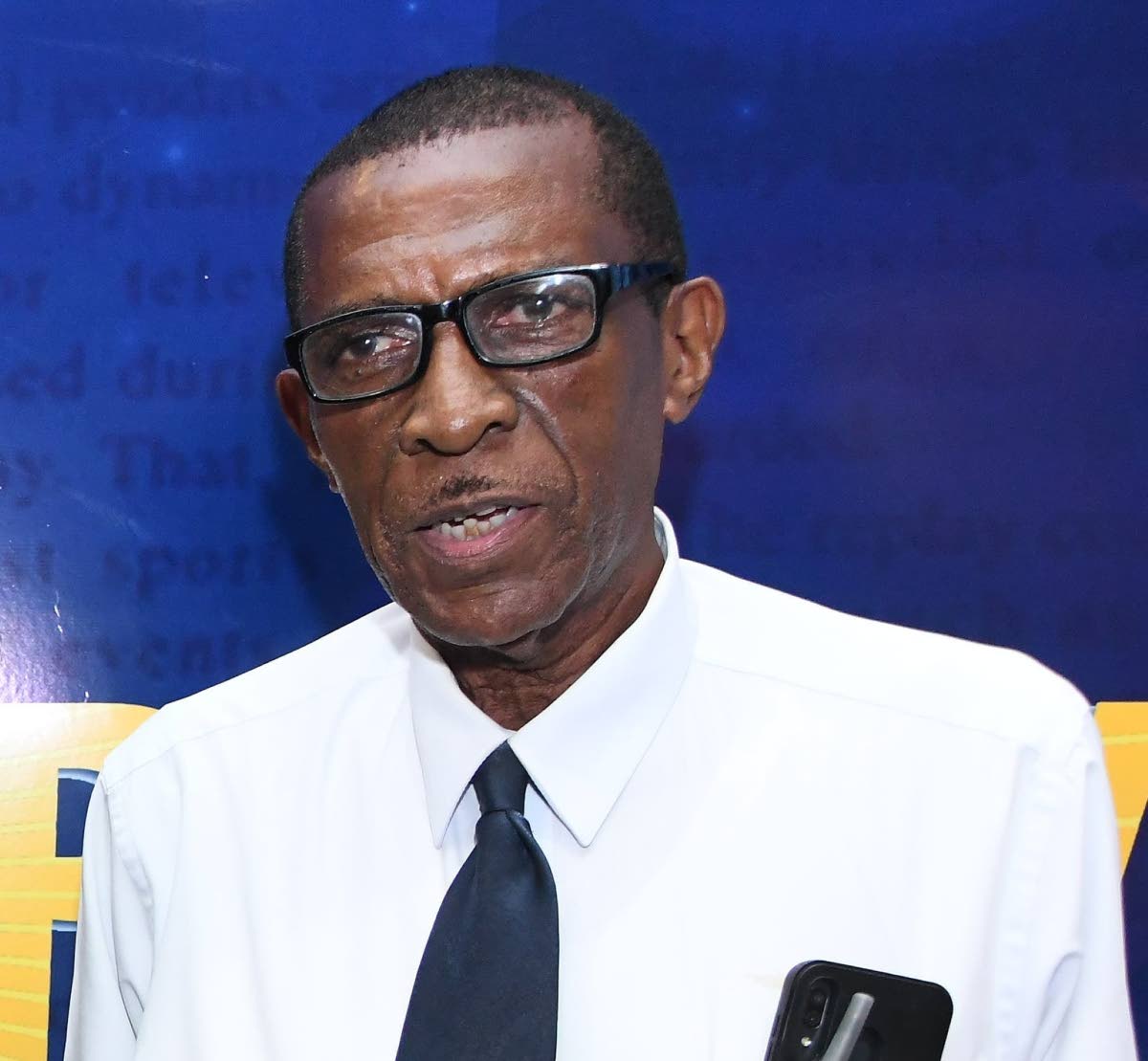
Veteran journalist Balford Henry, who died on Monday, is being remembered by colleagues, friends and the political class for his fair yet fearless journalism.
His death at age 74, following a brief illness, has triggered widespread tributes across the media industry.
“Balford was the person who taught me to look beyond the speech,” recalled Gleaner Associate Editor Robert Hart.
“When the Government outlined, in the 2003-2004 Budget Debate, the exemptions for essential goods included in its restructuring of the General Consumption Tax framework, they would have expected applause. But he showed me that just meant they weren’t pointing out all the hidden items that would not be zero-rated.
“Together, we exposed a range of items that were in danger of being taxed, including sanitary napkins, tampons, baby formula, basic foods, and medicines. Facing public backlash, the Government had to go back to the drawing board and, among other actions, legally codify sanitary napkins as tax-free items. I was proud of the national impact of our work together and, for a young reporter, it made this job feel like it meant something,” Hart said, noting that Henry, as his editor, took no credit.
Former Gleaner Editor-in-Chief Wyvolyn Gager said Henry was the “consummate professional who chose accuracy over speed every time”.
She added: “Balford was never driven by a desire for applause. He was a quiet, respectful man. He was someone who was committed to the truth and dedicated his life to keeping Jamaicans informed.”
Jamaica Observer Editor-at-Large Arthur Hall worked with Henry at both The Gleaner and The Observer.
“I first met Balford many years ago when I was a young man covering Parliament. At that time, I used to admire the fact that he had the confidence of members of parliament on both sides of the aisle, who would save documents for him and be willing to give him the interviews even when they didn’t speak to us,” Hall recalled.
“Over the years, I’ve worked with him in several capacities and in different media houses. He was a writer’s writer – always wanting to write … and always writing in a concise and clear manner that made it fun to read.”
Hall said Henry was a quiet, unassuming individual who was a credit to local journalism, adding that he will be sorely missed.
Colin Steer, who served as Gleaner news editor during Henry’s time as deputy news editor, also noted his “generally mild-mannered and unassuming” nature, but pointed out that “beneath that quiet exterior was a journalist with clear and strongly held views”.
He continued: “These found expression particularly in his opinion columns during the late 1970s and 1980s, where he demonstrated that the diligent reporter in the field was also a thoughtful observer of Jamaican society and public affairs.”
Added Steer: “Those who worked alongside Balford will also remember his distinctive method of producing copy. He could type at remarkable speed, largely using his two index fingers, attacking the keyboard with an urgency that seemed to match the pace of the newsroom itself. From a single event, press conference or development, Balford could often produce three or more separate stories, identifying different angles that another reporter might easily have overlooked.”
Former colleague Lester Hinds recalled the competitive spirit which marked their interactions both professionally and personally.
“He and I worked together at The Gleaner before I left for RJR. There was a kind of friendly rivalry between us as we sought to outdo each other in securing stories that were not assignments. When I was at RJR and he was still at The Gleaner, we would see each other on assignments and the friendship continued,” he said. “Balford was a true professional. The profession will be poorer for his passing.”
Henry’s career spanned several decades during which he also worked at the Jamaica Information Service (JIS), Reggae Times, the New York Daily News, and WLIB Radio in New York.
On his induction into the Order of Distinction (Officer Class) for distinguished service to journalism in 2011, Henry said he “simply loves to write” and responded to the call to the fourth estate during the summer of 1971, while a sixth-former at Wolmer’s Boys’ School.
He won the Press Association of Jamaica (PAJ) Best Story award for his coverage of the funeral of reggae icon Bob Marley in 1981, and the PAJ’s first Cultural Story Award for the feature ‘Fall of a Superstar’ on the rise and fall of reggae singer Junior Byles.
Although retired, Henry was a freelance writer with The Jamaica Observer at the time of his passing.
Prime Minister Dr Andrew Holness remembered Henry as a “committed journalist who understood the responsibility that comes with telling Jamaica’s story. His work reflected a deep knowledge of our politics, our people and the issues affecting our country”.
Culture Minister Olivia Grange said Henry’s was “a first-rate journalist who was committed to his craft”.
“I had great respect for Balford. He was always professional in his interactions and in his journalistic pursuits. He was sharp, he was keen, he could be tough, but he was always fair,” she said.
PAJ President Dashan Hendricks noted that Henry helped to document important periods in Jamaica’s political, industrial, and cultural life.
“Balford Henry represented a generation of journalists who understood the responsibility of recording the life of the country with seriousness and commitment. His contribution across labour, politics, culture and public affairs has left an important mark on Jamaican journalism,” Hendricks said.
Source: Jamaica Gleaner, 15 September 2026. Republished for the Wolmer’s Trust community with attribution.
Caribbean National Weekly
September 15, 2026
Veteran Jamaican journalist Balford George Henry, whose career spanning more than five decades included award-winning coverage of politics, labor, culture and some of the country’s defining events, has died.
Henry died Monday after a brief illness. He was 74.
A respected parliamentary and labor relations reporter, Henry worked in several capacities at both of Jamaica’s national newspapers, The Gleaner and the Jamaica Observer, and was widely recognized for his contribution to Jamaican journalism.
In 2011, he was conferred with the Order of Distinction in the rank of Officer for distinguished service to journalism.
Henry began his career in the summer of 1971 while he was a sixth-form student at Wolmer’s Boys’ School in Kingston.
In a 2011 interview with the Jamaica Information Service ahead of receiving his national honor, Henry said he “simply loves to write” and recalled responding to a Gleaner advertisement seeking trainee journalists.
“At that time, The Gleaner advertised for trainee journalists. I was among scores of young people from across Jamaica who sat the initiative tests, coincidently held at Wolmer’s Boys’ School auditorium. Fortunately, I was among the handful of successful candidates,” he recalled.
Henry entered the profession at a time when Jamaica had no journalism school and The Gleaner served as an important training ground for young print journalists.
There, he learned from prominent journalists including Ken Allen, Calvin Bowen, L.K. Southerland and then Editor-in-Chief Theodore Sealy.
He credited veteran journalist and broadcaster Barbara Gloudon with recognizing his talent for feature writing early in his career.
“Barbara Gloudon, in particular, discovered very early in my career that I enjoyed writing features, and encouraged and nurtured my efforts,” Henry said in the JIS interview.
He recalled the training as demanding, saying the late Fitzroy Nation was “the only other member of my group to survive that ordeal.”
Henry went on to cover a wide range of beats, including general and local government elections, Parliament, labor relations, the economy, entertainment and local government.
Early in his career, he reported on meetings of the then Kingston and St. Andrew Corporation and major social and cultural events. He later became a veteran labor reporter, covering major industrial disputes and strikes during Jamaica’s turbulent 1970s.
His work also earned him several journalism awards.
Henry won the Press Association of Jamaica’s Best Story Award for his coverage of reggae icon Bob Marley’s funeral in 1981. He later received the association’s first Cultural Story Award for “Fall of a Superstar,” a feature examining the rise and fall of reggae singer Junior Byles.
He also received a PAJ honorary award for a series examining the social and economic challenges facing Jamaican youth in Britain’s inner cities, drawing on his experiences while living there in 1977.
In 2019, the PAJ honored Henry as a veteran journalist for his contribution to the profession.
His career extended beyond Jamaica. Henry was a Commonwealth Press Union fellow in London in 1977 and earned a diploma in journalism as a Thomson Foundation scholar in Cardiff, Wales, that same year.
In 1983, he was one of 12 journalists from around the world selected by the World Press Institute for a fellowship at Macalester College in St. Paul, Minnesota.
Henry also worked with the New York Daily News and served as a correspondent for WLIB Radio in New York. During the 1990s, he was editor of Reggae Times and a reporter for The Overseas Gleaner’s North America edition. He later served as a consulting editor at the Jamaica Information Service.
Prime Minister Andrew Holness was among those paying tribute to Henry following news of his death, describing him as a committed journalist who understood the responsibility of documenting Jamaica.
“His work reflected a deep knowledge of our politics, our people and the issues affecting our country,” Holness said.
“His passing is a loss to Jamaica’s media fraternity and to the many people who knew and worked with him over the years. I extend my heartfelt condolence to his family, friends, colleagues and the wider journalism community.”
Culture, Gender, Entertainment and Sport Minister Olivia Grange described Henry as “a first-rate journalist” and an outstanding writer and interviewer.
She said Henry was an “outstanding writer and questioner whose easy-going demeanour belied the penetrating nature of his questions.”
“I had great respect for Balford. He was always professional in his interactions and in his journalistic pursuits. He was sharp, he was keen, he could be tough, but he was always fair,” Grange said.
Henry is survived by his widow, Claudia Stockhausen-Henry, and four children — two sons and two daughters.
Caribbean National Weekly published the same portrait shown with the Gleaner report.
Source: Caribbean National Weekly, 15 September 2026. Republished for the Wolmer’s Trust community with attribution.
